



From Durability to Aesthetics: Breaking Down the Differences Between Granite and Quartz Worktops
Choosing between granite and quartz worktops is one of the most common decisions homeowners face when planning a new kitchen. Both materials are incredibly popular because they offer excellent durability, attractive finishes, and long term value. While they may look similar at first glance, the differences in their structure, performance, and maintenance can have a significant impact on your kitchen’s design and daily use.
Understanding how each option behaves in real homes makes the decision far easier. At Mayfair Worktops, we install thousands of granite and quartz worktops each year using digital Prodim templating, in house manufacturing, and installation by our own stonemasons. With this experience, we know how each material performs and how to help homeowners choose the right one for their project.
What Exactly Are Granite and Quartz Worktops?
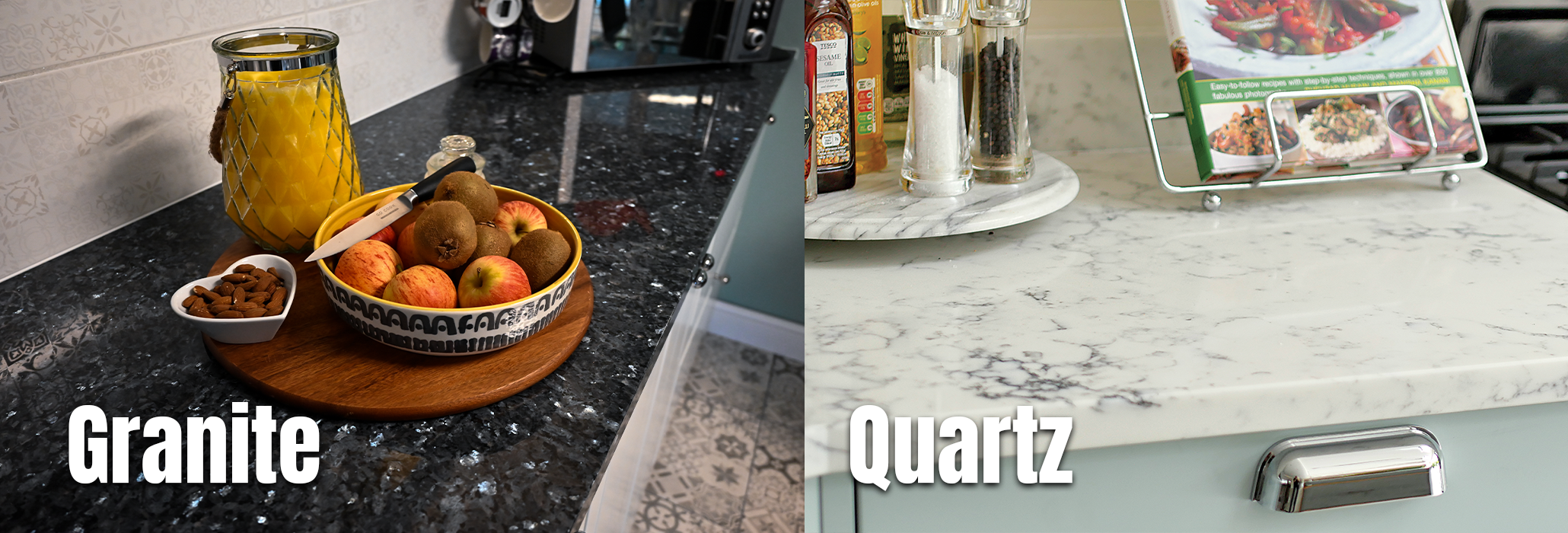
Granite is a natural stone formed deep within the earth, meaning every slab is unique. Its patterns and colours develop naturally over thousands of years, making it ideal for those who want a surface with individuality and character. No two granite worktops are ever the same, which is often a major selling point for homeowners seeking a one of a kind design feature.
Quartz, on the other hand, is an engineered material made from natural quartz minerals combined with resins and pigments. This manufacturing process creates a surface that is highly consistent in colour and pattern, which appeals to those who prefer a uniform, modern aesthetic. The engineered structure also gives quartz exceptional strength and predictable performance across all kitchens.

Comparing Durability and Practical Performance
Granite is extremely strong and naturally heat resistant, making it ideal for homeowners who want a hard wearing surface. However, because it is a natural stone, granite is porous and requires sealing to protect it against stains. With correct care, it offers excellent long term performance and remains a favourite among customers who value natural materials.
Quartz is equally durable, but its non porous structure means it does not require sealing. It resists stains exceptionally well and is very easy to maintain, making it a practical choice for busy families. The only area where quartz must be handled with care is heat, as placing extremely hot pans directly on the surface can cause damage. With normal everyday precautions, quartz provides reliable and consistent performance.

Differences in Appearance and Design Options
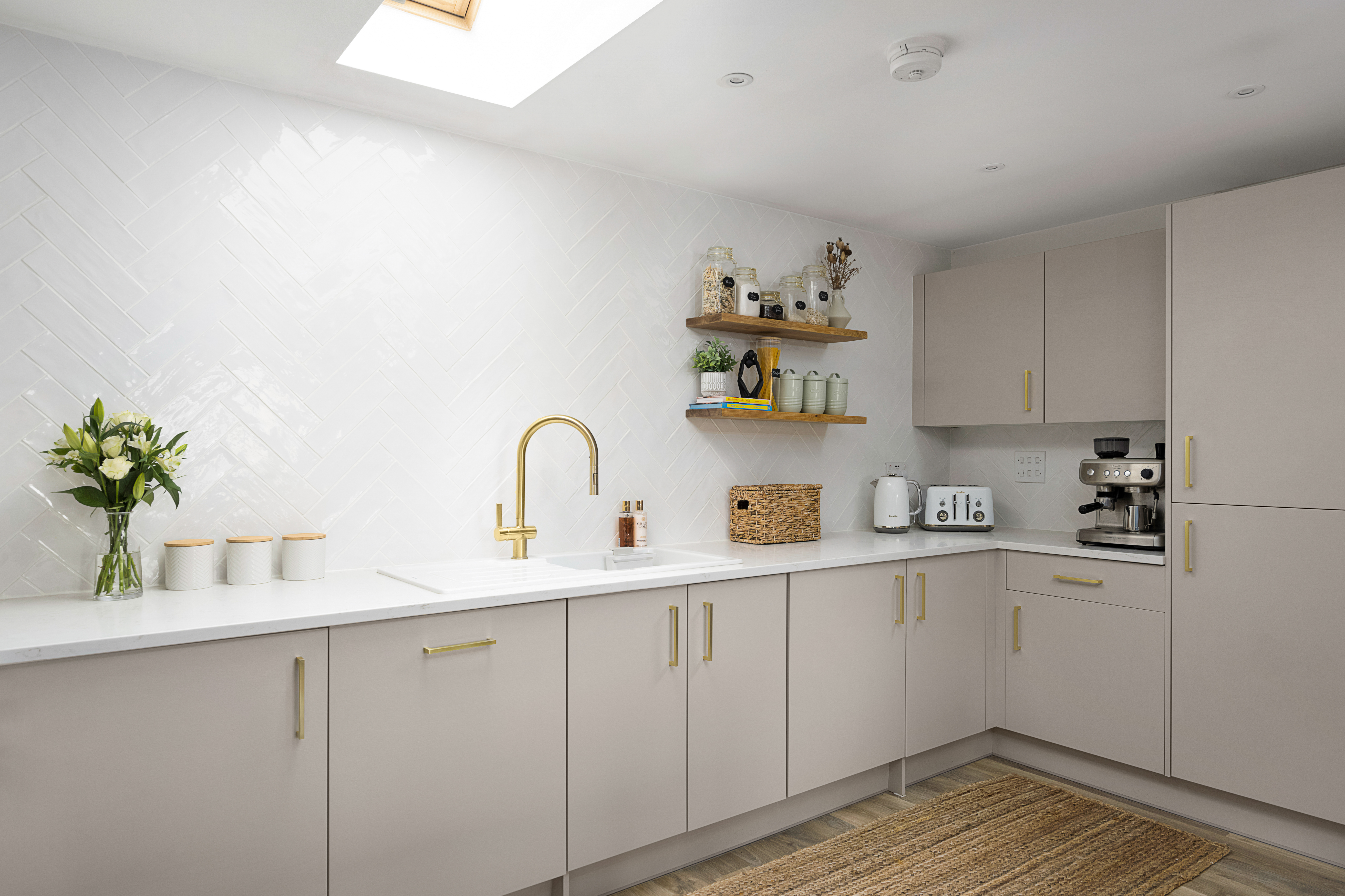
Granite’s natural beauty is one of the main reasons people choose it. Its patterns vary from dramatic veining to delicate mineral details, offering a level of character that can transform a kitchen into something truly unique. These natural variations often make granite an ideal choice for traditional, rustic, or statement kitchens looking for depth and individuality.
Quartz offers total consistency, making it ideal for sleek, modern, and contemporary designs. Because quartz can be engineered in a wide range of colours and styles, homeowners can easily match it with cabinetry, flooring, or feature lighting. Whether you want a clean white finish, subtle veining, or bold colour, quartz provides controlled and predictable design flexibility.
Maintenance, Cleaning, and Everyday Care
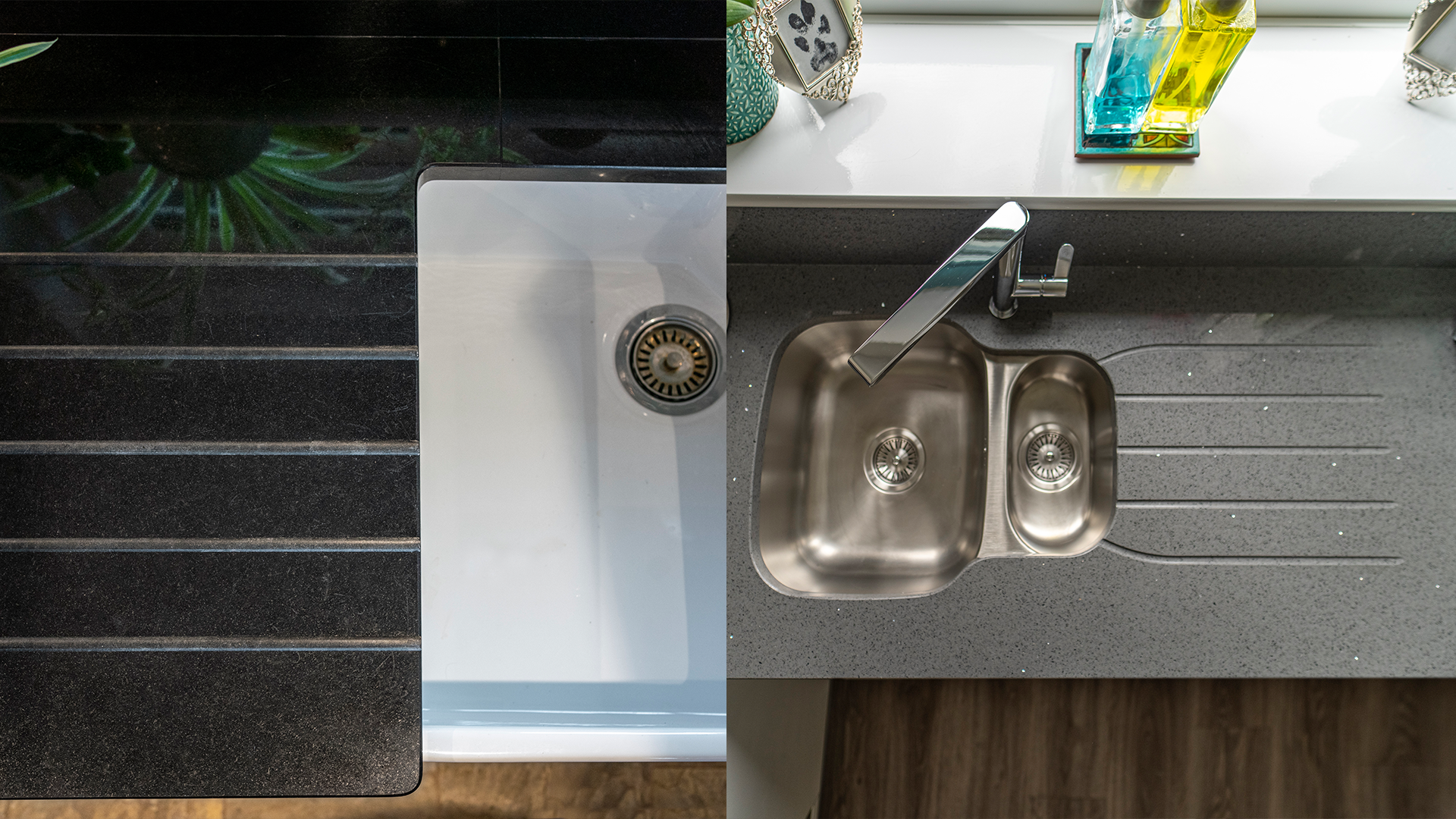
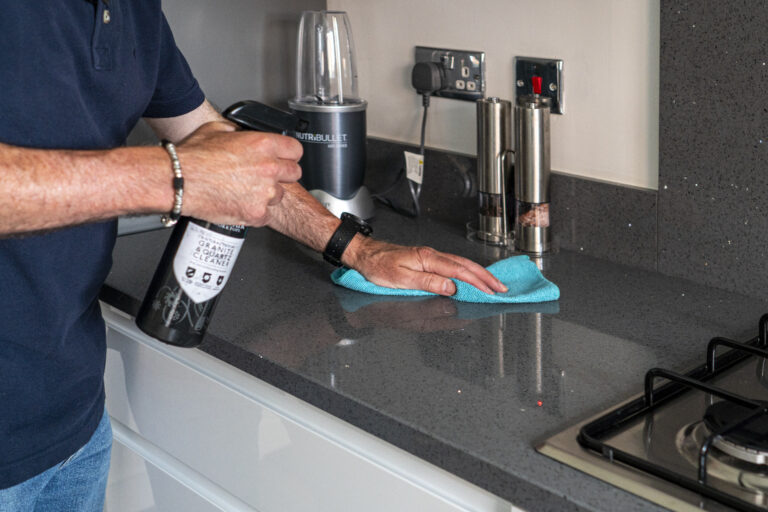
Granite requires sealing to reduce absorbency and protect against staining. This is a simple and infrequent process, but it is an important part of maintaining long term performance. Day to day cleaning is easy with mild soap or specialist cleaners, but acidic products should be avoided as they may dull the surface over time.
Quartz is naturally non porous, meaning it does not require sealing and is extremely resistant to staining. A simple wipe with warm water and mild cleaner keeps it looking its best. Because of its engineered composition, quartz maintains a consistent finish and is ideal for homeowners seeking low maintenance surfaces with excellent hygiene.

Environmental Differences and Installation Considerations
Granite is quarried directly from the earth and transported to fabrication facilities. While it is a natural material, the extraction and cutting processes require energy and significant handling. Many homeowners appreciate granite for its authenticity and long lifespan, which can make it a sustainable choice when maintained well.
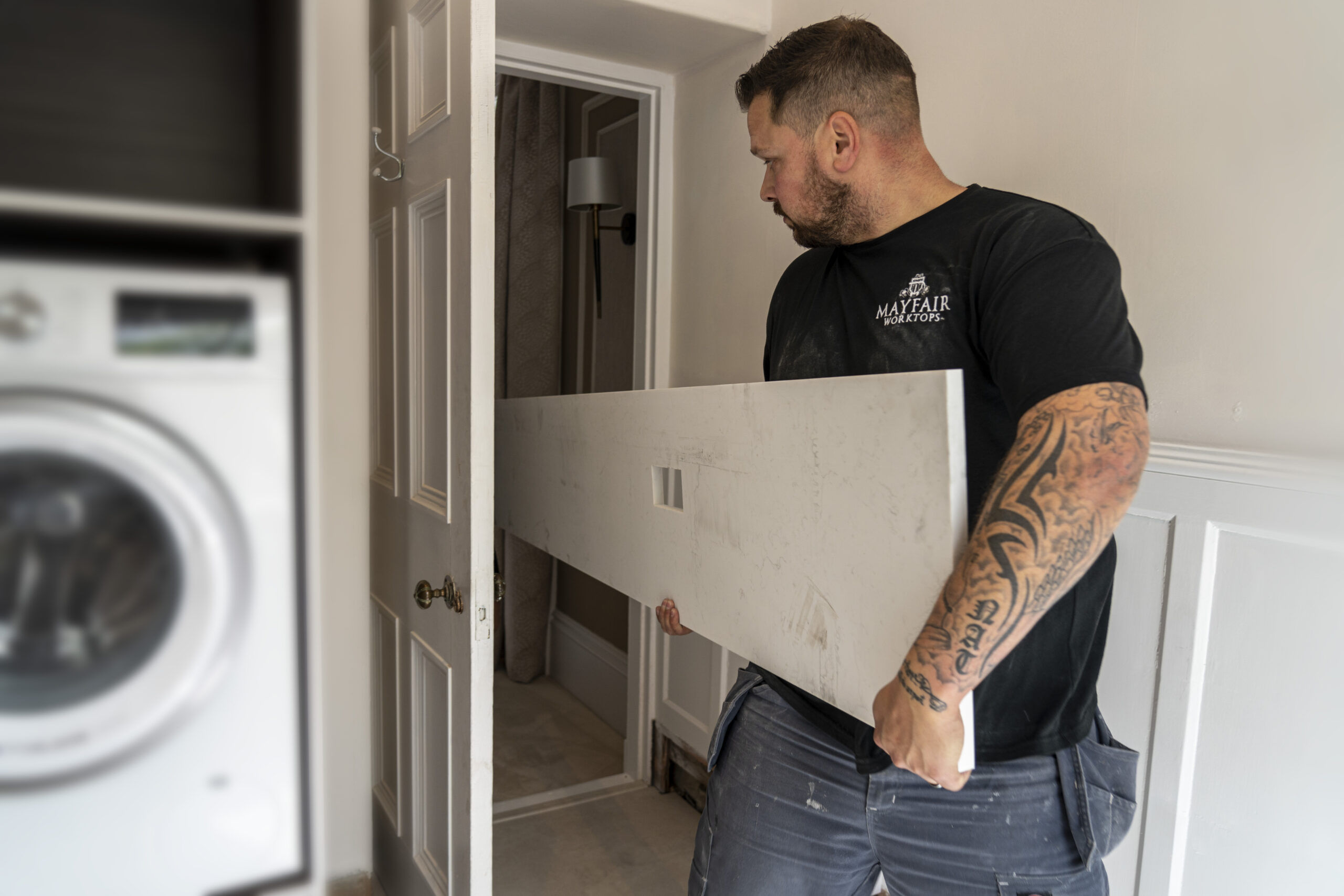
Quartz production often includes the use of recycled materials, and its controlled fabrication ensures efficient material use. Installation for both materials requires professional expertise due to their weight and precision needs. At Mayfair Worktops, our in house stonemasons ensure both materials are templated, manufactured, and installed to exact standards, and our Which? Trusted Trader accreditation provides reassurance that the process is handled with complete professionalism.
Popular colours
The first decision is colour: white, neutral, brown, or black worktops, with or without veins or sparkle—choose the perfect style for you.
Get an Instant Quote
Request a free quote today and be one
step closer to your dream kitchen.